



When we set out to start doing physical exercise, whether to improve our physical condition, improve our health or prepare for a sports competition, we ask ourselves what things we should do, what not, how to plan our physical exercise sessions, etc.
For an effective development of the training process, first of all, it is essential to base ourselves on training principles, maxims or very generic laws that govern the process of developing physical condition, guaranteeing its correct application (Navarro et al, 1991).
There are many currents that have defined one or the other training principles, being in many cases similar but with different nomenclatures. In this post, we are going to present the main training principles.
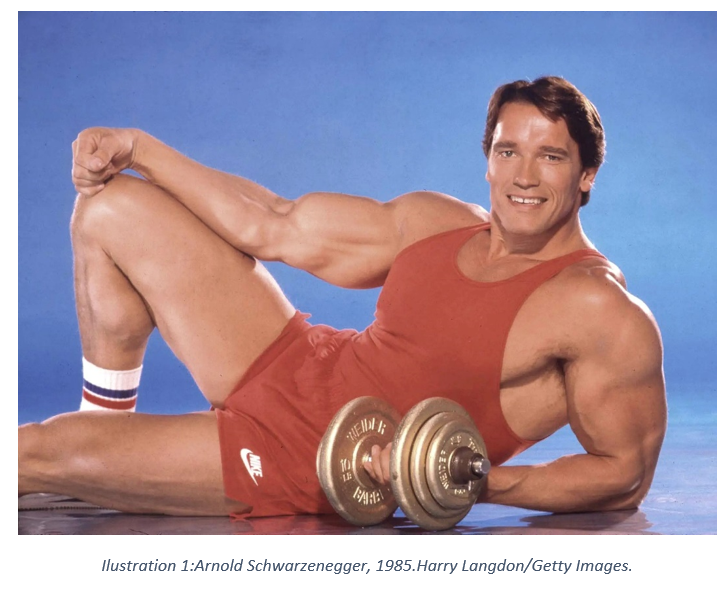
“There are no shortcuts, everything is reps, reps and reps”
(Arnold Schwarzenegger)
Principle of overload or effective stimulation of the load:
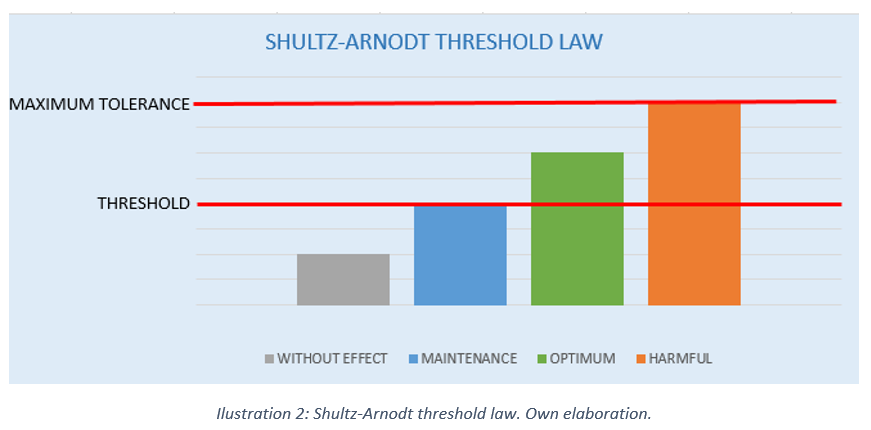
To elicit adaptations and gain benefits from training effects, the stimulus must exceed a certain threshold or level of effort. This statement is based on the Schultz-Arnodt Law, which indicates that the stimuli must be applied according to the threshold of each subject.
Principle of progression:
It is necessary to increase the stimulus to avoid stagnation. The methodology to increase the stimulus is (Navarro et al, 1990):
-
- Training frequency
-
- Volume of load per unit of training
-
- Stimulus density in the training unit
-
- Increased stimulus intensity
Principle of variety:
To avoid monotony and inefficiency even with exercises with the correct load, it is necessary to vary exercises, training methods and places.
Principle of load optimization:
Supercompensation is the adaptation of our organism to an adequate training stimulus. Once the effort, the training session, is over, there is a recovery period after which supercompensation occurs, a situation in which our performance capacity is greater. That moment is the ideal time to carry out another training session, causing positive supercompensation.
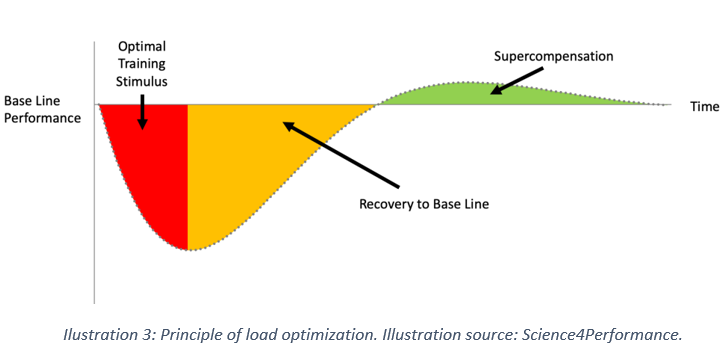
It is essential to control the rest periods between training sessions to promote supercompensation and improve performance.
Principle of repetition and continuity:
As Arnold Schwarzenegger said: “There are no shortcuts, everything is repeat, repeat and repeat.” To improve physical condition, repeated actions are necessary. Carrying out exercises or sessions isolated over time, with excessive rest between one and the other, do not produce beneficial effects.
Principle of reversibility:
In the absence of adequate stimuli, the adaptations achieved with training are lost. Stamina and strength resistance are abilities that suffer a rapid loss due to detraining (gain-loss ratio 3:1). While maximum strength, speed strength and speed capabilities, have greater stability and suffer a slower loss.
Principle of periodization:
Pavlovich Matveiev, considered the father of modern sports planning, defined periodization as “The process of dividing the annual plan into smaller training periods / phases and in this way ensuring that optimal sports form or maximum athletic condition is achieved.”
Both at the amateur and professional level, it is important to structure the training loads to obtain the maximum possible adaptations.
Principle of individuality:
Faced with the same stimulus, each person can respond differently, so it is necessary to individualize the physical exercises, their intensity, duration, method, etc.
Principle of specificity:
After creating a good generic base on which to support all the training loads (general preparation), adaptations specific to the sport in question must be provoked (specific preparation).